


If you’ve ever watched a courtroom drama or followed a real-life legal case, you’ve probably heard the term “bail.” But many people still wonder: what is bail, and how does it actually work in real life? The concept can seem confusing at first, especially because it involves legal procedures, financial conditions, and individual rights.
At its core, bail is about balancing two important goals—ensuring that a person accused of a crime appears in court, while also respecting their right to freedom before being proven guilty. Without bail, many accused individuals would remain in jail for long periods, even before their case is heard.
Understanding what is bail is important not just for legal awareness, but also for knowing your rights or helping someone else in a difficult situation. This guide breaks down everything in a clear, practical way—from the basics to the types of bail and how the process works.
What Is Bail?
Bail is a legal arrangement that allows an accused person to be released from custody while awaiting trial, usually in exchange for money or a guarantee. This payment acts as a form of security to ensure that the person returns to court when required.
When someone is arrested, they are typically taken into custody. However, the law recognizes that keeping someone behind bars before a trial may not always be fair, especially if they have not been proven guilty. That’s where bail comes in. It provides temporary freedom under certain conditions.
In simple terms, when you ask what is bail, you can think of it as a promise backed by money. If the accused attends all court hearings, the bail amount is usually returned. If they fail to appear, the money may be forfeited, and further legal consequences can follow.
Why Is Bail Important?
The concept of bail exists to protect individual rights while maintaining the integrity of the legal system. Without bail, even minor offenders could remain in jail for extended periods, which would be both unjust and impractical.
Bail serves multiple purposes. First, it ensures that the accused person returns to court. Second, it prevents overcrowding in prisons by allowing temporary release. Third, it respects the principle that a person is innocent until proven guilty.
When discussing what is bail, it’s important to understand that it’s not meant to punish the accused. Instead, it’s a mechanism to maintain fairness and order within the justice system.
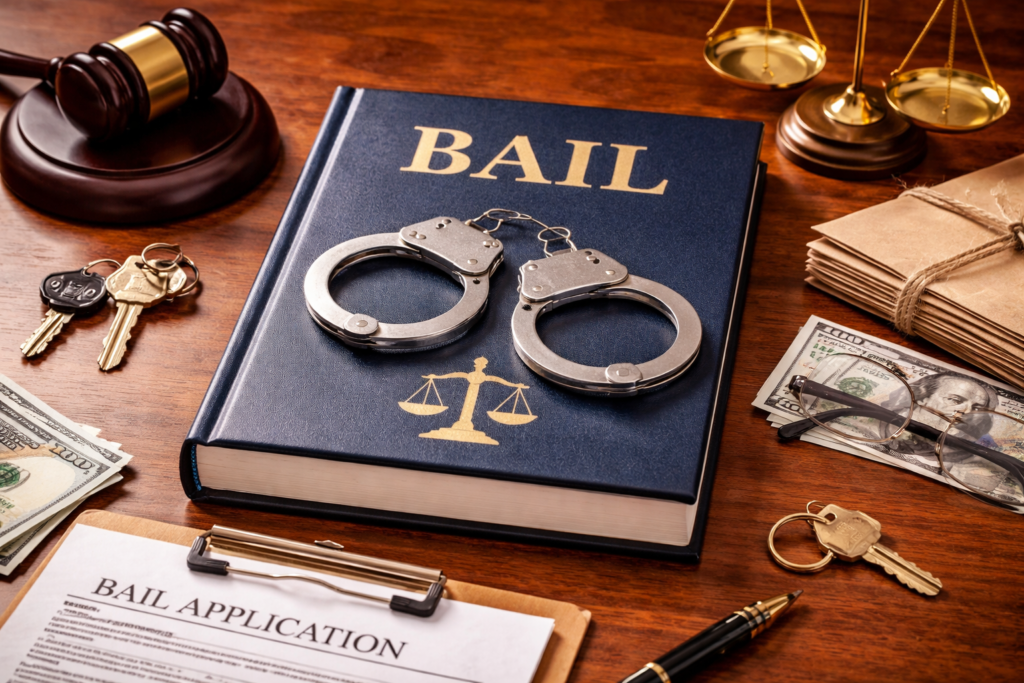
How Does Bail Work?
The process of bail begins soon after a person is arrested. A judge or magistrate reviews the case and decides whether bail should be granted and under what conditions.
Several factors influence this decision, including the seriousness of the crime, the person’s criminal history, and the likelihood that they will appear in court. If the judge believes the accused might flee or pose a danger to society, bail may be denied.
Once bail is set, the accused (or someone on their behalf) must pay the required amount or provide a guarantee. After that, they are released with the condition that they attend all future court hearings.
Types of Bail
Understanding the different types helps clarify what is bail in practical scenarios. Courts may offer different forms depending on the situation.
- Cash Bail: The full bail amount is paid in cash and returned after court appearances are completed.
- Surety Bail: A third party, often a bail bondsman, guarantees payment if the accused fails to appear.
- Personal Bond: The accused is released based on a promise to appear in court without paying money upfront.
- Property Bail: Property is used as collateral instead of cash.
Each type has its own requirements and risks, and the court decides which option is appropriate based on the case.
Factors That Affect Bail Amount
When determining bail, courts don’t randomly assign an amount. Instead, they carefully evaluate several important factors to ensure fairness and effectiveness.
- Severity of the crime: More serious offenses usually result in higher bail amounts.
- Criminal history: Repeat offenders may face stricter conditions.
- Flight risk: If the accused is likely to flee, bail may be higher or denied.
- Community ties: Strong local connections can result in lower bail.
These factors ensure that bail is tailored to each individual case rather than applied as a one-size-fits-all solution.
Bail vs. Bond: What’s the Difference?
People often confuse bail with a bond, but they are not exactly the same. While both serve the same purpose—securing release from custody—the way they work differs.
| Aspect | Bail | Bond |
|---|---|---|
| Definition | Money paid directly to the court | A guarantee provided by a third party |
| Payment | Paid by the accused or family | Paid through a bail bondsman |
| Refund | Refundable after court appearances | Non-refundable fee (usually a percentage) |
| Risk | Full amount at risk | Bondsman assumes most risk |
Understanding this distinction is key when exploring what is bail, especially if financial arrangements are involved.
What Happens If You Don’t Pay Bail?
If the accused cannot afford bail, they may have to remain in custody until their trial begins. This can take weeks or even months, depending on the legal system and case complexity.
In some situations, courts may reconsider bail or offer alternatives, such as reduced amounts or personal bonds. However, if bail is not paid and no alternative is granted, the person stays in jail.
This highlights one of the major criticisms of the bail system—that it can disproportionately affect those with fewer financial resources.
Do You Get Bail Money Back?
One of the most common questions related to what is bail is whether the money is refundable. The answer depends on how the bail was paid.
If cash bail is paid directly to the court, it is typically refunded after all court appearances are completed, regardless of the case outcome. However, if a bail bond is used, the fee paid to the bondsman is usually non-refundable.
The key condition is compliance. If the accused attends all hearings, the money is returned. If not, the bail may be forfeited, and additional legal trouble can arise.
Can Bail Be Denied?
Yes, bail is not guaranteed in every case. Courts may deny bail if they believe the accused poses a serious risk. This often happens in cases involving violent crimes, repeat offenders, or individuals likely to flee.
In such situations, the accused remains in custody until the trial concludes. This decision is based on protecting public safety and ensuring the legal process is not disrupted.
Understanding what is bail also means recognizing that it is a privilege granted under certain conditions—not an automatic right in all cases.
Real-Life Example of Bail
Imagine a person is arrested for a minor offense like shoplifting. The court sets bail at a certain amount. The individual or their family pays this amount, and the person is released.
They attend all court hearings as required. Once the case concludes, the bail money is returned. However, if they skip a court date, the bail is forfeited, and a warrant may be issued for their arrest.
This simple example helps clarify what is bail and how it functions in everyday legal scenarios.

FAQs
What is bail in simple terms?
Bail is a payment or guarantee that allows an accused person to be released from jail while waiting for their trial. It ensures they return to court when required.
Is bail always money?
No, bail is not always money. It can also be a personal promise, property, or a bond provided by a third party, depending on the court’s decision.
What happens if someone skips bail?
If a person fails to appear in court, the bail amount is forfeited, and a warrant may be issued for their arrest. Additional penalties may also apply.
Can bail be reduced?
Yes, in some cases, a lawyer can request a bail reduction if the amount is too high or unfair based on the circumstances.
Is bail the same in every country?
No, bail systems vary by country. While the basic concept is similar, the rules and procedures differ depending on local laws.
Conclusion
Understanding what is bail is essential for navigating the legal system or supporting someone who is going through it. Bail is not just about money—it represents a balance between personal freedom and legal responsibility. It allows individuals to continue their lives while awaiting trial, without compromising the justice process.
Read More:-What Is Cashless Bail? A Complete Beginner’s Guide